
Top 5 NASA Missions That Changed History
The National Aeronautics and Space Administration, commonly known as NASA, has been at the forefront of space exploration for over six decades. Since its establishment in 1958, NASA has undertaken countless missions that have fundamentally transformed our understanding of the universe, advanced technological innovation, and inspired generations of scientists, engineers, and dreamers. While NASA has conducted hundreds of significant missions throughout its history, certain endeavors stand out as truly transformative—missions that not only achieved their primary objectives but also reshaped human knowledge and capability in ways that continue to resonate today.
In this comprehensive exploration, we will examine five of NASA's most historically significant missions. These missions were selected not merely for their technical achievements, but for their profound impact on science, technology, and human civilization as a whole. Each mission represents a milestone in our journey to understand our place in the cosmos and our capacity to reach beyond our planetary boundaries.
The Apollo 11 Mission: Humanity's Giant Leap
The Dream of Lunar Landing
When President John F. Kennedy declared in 1961 that the United States would land a man on the Moon before the decade's end, it seemed like an impossible dream. The technology required did not yet exist. The challenges were immense, and the risks were substantial. Yet this bold vision catalyzed one of the greatest technological achievements in human history: the Apollo 11 mission.
The Apollo program was born from the Cold War space race between the United States and the Soviet Union. Both superpowers were competing to demonstrate technological superiority and ideological dominance through space exploration. The Soviets had achieved several early victories, including launching the first satellite, Sputnik, and sending the first human, Yuri Gagarin, into space. The American response was to set an audacious goal that would require unprecedented innovation and coordination.
The Mission Parameters
Apollo 11 launched on July 16, 1969, from Kennedy Space Center in Florida. The mission carried three astronauts: Neil Armstrong, Buzz Aldrin, and Michael Collins. The spacecraft consisted of three main components: the Command Module, the Service Module, and the Lunar Module. This complex arrangement was necessary because the spacecraft had to escape Earth's gravity, travel to the Moon, land safely on the lunar surface, and return to Earth.
The journey to the Moon took four days. During this time, the astronauts conducted various experiments and observations while traveling through the vacuum of space. The precision required for this journey was extraordinary. A miscalculation of just a few degrees could have sent the spacecraft hurtling past the Moon or crashing into it.
The Historic Landing
On July 20, 1969, the Lunar Module, nicknamed the Eagle, separated from the Command Module and began its descent toward the Moon's surface. Neil Armstrong took manual control of the spacecraft as it approached the landing site in the Sea of Tranquility. With fuel running dangerously low and alarms sounding in the cabin, Armstrong guided the Eagle to a safe landing spot with just seconds of fuel remaining.
Armstrong's first words upon stepping onto the lunar surface—"That's one small step for man, one giant leap for mankind"—became one of the most famous statements in human history. Buzz Aldrin joined him shortly after, and together they spent approximately two and a half hours exploring the lunar surface, collecting samples, and conducting experiments.
The Lasting Impact
The Apollo 11 mission achieved far more than simply landing humans on the Moon. It demonstrated that with sufficient determination, resources, and innovation, humanity could accomplish seemingly impossible feats. The mission generated technological advances that had applications far beyond space exploration, including improvements in computing, materials science, and telecommunications.
The psychological impact was equally profound. For the first time in human history, people could see their home planet from the perspective of space. The images of Earth taken during the Apollo missions helped foster a sense of global unity and environmental awareness. The mission inspired millions of people to pursue careers in science and engineering, creating a legacy that continues to influence education and innovation today.
The Apollo 11 mission also established the United States as the leader in space exploration, a position it has largely maintained. The success of the mission demonstrated American technological prowess and provided a sense of national pride and accomplishment that resonated throughout the world.
The Hubble Space Telescope: Revolutionizing Astronomy
A Vision Beyond Earth
While the Apollo missions focused on exploring our nearest celestial neighbor, the Hubble Space Telescope represented a different kind of exploration—one that would allow us to peer deeper into the universe than ever before. The concept of a space-based telescope had been discussed since the 1940s, but it took decades of development before the technology became reality.
The Hubble Space Telescope was launched on April 24, 1990, aboard the Space Shuttle Discovery. Named after astronomer Edwin Hubble, who discovered that the universe extended far beyond our Milky Way galaxy, the telescope was designed to observe the universe in visible, ultraviolet, and infrared wavelengths without the distortion caused by Earth's atmosphere.
Initial Challenges and Triumph
Shortly after deployment, scientists discovered a critical flaw in the telescope's primary mirror. The mirror had been ground to the wrong specifications, causing images to be blurry. This discovery was devastating—the most expensive scientific instrument ever built appeared to be a failure. However, NASA engineers developed an ingenious solution: a corrective optics package that functioned like a pair of glasses for the telescope.
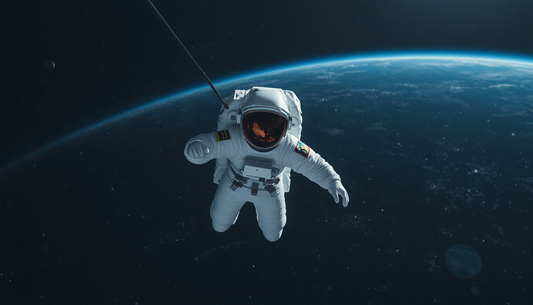
In December 1993, astronauts aboard the Space Shuttle Endeavor installed the corrective optics during a series of spacewalks. The repair was a stunning success, and Hubble began producing the clear, detailed images that scientists had envisioned. This triumph demonstrated not only the resilience of the space program but also the importance of human spaceflight in maintaining and upgrading complex instruments in orbit.
Transforming Our Understanding of the Universe
Once operational, Hubble began making discoveries that fundamentally changed our understanding of the cosmos. The telescope revealed that the universe was expanding at an accelerating rate, a discovery that led to the concept of dark energy and earned the 2011 Nobel Prize in Physics for the scientists involved.
Hubble observations provided evidence for the existence of supermassive black holes at the centers of galaxies. The telescope captured images of galaxies as they existed billions of years ago, allowing astronomers to study the evolution of galaxies over cosmic time. These observations have provided crucial insights into how galaxies form, merge, and evolve.
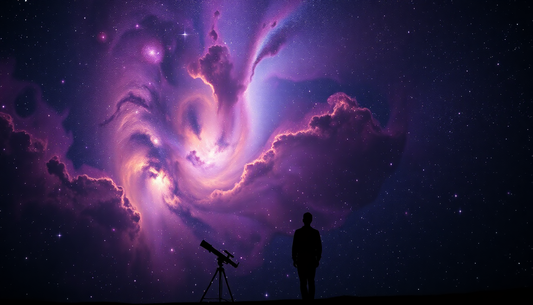
The Hubble Deep Field image, taken in 1995, is perhaps the most iconic image produced by the telescope. This image showed approximately 3,000 galaxies in a tiny patch of sky no larger than a grain of sand held at arm's length. The image profoundly illustrated the vast scale of the universe and the humbling perspective it provides on humanity's place within it.
Ongoing Legacy
More than three decades after its launch, Hubble continues to operate and produce groundbreaking observations. The telescope has been serviced and upgraded multiple times by astronauts, extending its operational life far beyond its original design specifications. The success of Hubble paved the way for other space-based observatories, including the James Webb Space Telescope, which launched in 2021 and has already begun producing remarkable discoveries.
The Hubble Space Telescope represents a triumph of human ingenuity, perseverance, and collaboration. It has demonstrated the value of investing in fundamental scientific research and the importance of maintaining human spaceflight capabilities to support complex scientific instruments.
The Mars Rover Missions: Exploring the Red Planet
The Quest for Life on Mars
Mars has captivated human imagination for centuries. As the closest planet to Earth that might harbor life, it has been a natural target for exploration. However, Mars is a harsh environment, with a thin atmosphere, extreme temperatures, and intense radiation. Successfully landing rovers on Mars and operating them for extended periods represents a remarkable achievement in robotics and planetary science.
NASA's Mars Exploration Program has sent several rovers to the Red Planet, but two missions stand out for their exceptional achievements: the Spirit and Opportunity rovers, which landed in 2004, and the Curiosity rover, which landed in 2012.
Spirit and Opportunity: Exceeding Expectations
The Spirit and Opportunity rovers were designed to operate for approximately 90 Martian days (sols), with a primary mission to search for evidence of past water on Mars. Both rovers far exceeded their design specifications, with Opportunity operating for nearly 15 years before being disabled by a dust storm in 2018.
These rovers made numerous discoveries that fundamentally changed our understanding of Mars. They found evidence of ancient hot springs and acidic water, suggesting that Mars once had conditions potentially suitable for microbial life. The rovers discovered layered rocks that indicated repeated cycles of water activity, and they found minerals that form in the presence of water.
The rovers also conducted detailed geological surveys, revealing the diversity of Martian geology and the planet's complex geological history. The data collected by Spirit and Opportunity provided crucial information that guided the design and mission planning of subsequent Mars rovers.
Curiosity: A Mobile Laboratory
The Curiosity rover, which landed in 2012, was significantly larger and more capable than its predecessors. Curiosity carried a sophisticated suite of scientific instruments, including a drill for sampling subsurface rocks, a laser for analyzing rock composition from a distance, and various cameras and spectrometers.
Curiosity's primary mission was to assess whether Mars ever had conditions suitable for microbial life. The rover has made numerous discoveries supporting this conclusion, including evidence of organic compounds in Martian rocks and variations in atmospheric methane that could indicate biological or geological processes.
One of Curiosity's most significant discoveries was evidence of a habitable environment in Gale Crater, where the rover landed. The rover found that ancient Mars had neutral pH water, the chemical ingredients necessary for life, and an energy source—all requirements for microbial life as we understand it.
Technological Achievements
The Mars rovers represent remarkable achievements in robotics and autonomous systems. Operating on Mars presents unique challenges: the communication delay between Earth and Mars means that rovers must operate with a high degree of autonomy. Commands sent from Earth take between 3 and 22 minutes to reach Mars, depending on the planets' positions in their orbits. This delay makes real-time control impossible, requiring rovers to be programmed with sophisticated decision-making capabilities.
The rovers must navigate treacherous terrain, avoid hazards, and conduct scientific investigations while managing limited power resources. The engineering solutions developed for the Mars rovers have applications in terrestrial robotics and autonomous systems, demonstrating how space exploration drives technological innovation.
The Broader Impact
The Mars rover missions have captured public imagination in a way that few scientific endeavors have. The rovers have become beloved characters in the public consciousness, with their discoveries widely covered in the media and their images shared across social media platforms. This public engagement has helped maintain support for space exploration and inspired young people to pursue careers in science and engineering.
The rovers have also demonstrated the value of long-term, sustained exploration. While individual missions are important, the cumulative knowledge gained from multiple rovers operating over extended periods provides a comprehensive understanding of Mars that no single mission could achieve.
The Voyager Missions: Humanity's Ambassadors to the Stars
Launching into the Unknown
In 1977, NASA launched two spacecraft, Voyager 1 and Voyager 2, on a mission to explore the outer planets of our solar system. The Voyagers were designed to take advantage of a rare alignment of the outer planets that occurs only once every 176 years, allowing a spacecraft to visit multiple planets in a single mission using gravitational assists.
The primary mission objectives were to conduct close-up studies of Jupiter and Saturn, including their moons and ring systems. However, the Voyagers were designed with the capability to continue beyond these planets, and Voyager 2 was given the additional objective of visiting Uranus and Neptune.
Discoveries at the Giant Planets
Voyager 1 reached Jupiter in January 1979, followed by Voyager 2 in July 1979. The spacecraft made remarkable discoveries at Jupiter, including evidence of a faint ring system, the discovery of new moons, and detailed observations of Jupiter's complex atmosphere and magnetic field.
The observations of Jupiter's moon Io revealed active volcanism, making Io the first body beyond Earth known to have active volcanoes. The discovery of Europa, with its icy surface and evidence of a subsurface ocean, suggested that this moon might harbor conditions suitable for life. These discoveries fundamentally changed our understanding of the diversity of worlds in our solar system.
Voyager 1 reached Saturn in November 1980, and Voyager 2 arrived in August 1981. The Voyagers revealed Saturn's rings in unprecedented detail, discovering new rings and gaps within the ring system. The observations showed that Saturn's rings are far more complex and dynamic than previously understood, with structures created by the gravitational influence of small moons orbiting within the rings.
The Voyagers also discovered numerous new moons around Jupiter and Saturn, expanding our knowledge of these planetary systems. The observations of Saturn's moon Titan revealed a thick atmosphere, making it the only moon in the solar system known to have a substantial atmosphere.
The Grand Tour Continues
Voyager 2 continued beyond Saturn to visit Uranus in January 1986 and Neptune in August 1989. These encounters provided the first close-up views of these distant ice giants. The observations revealed that Uranus has a complex system of rings and moons, and that Neptune has the strongest winds in the solar system, with wind speeds exceeding 2,000 kilometers per hour.
The discovery of geysers on Neptune's moon Triton was particularly surprising, as Triton is one of the coldest places in the solar system. The geysers appeared to be eruptions of nitrogen ice, demonstrating that geological activity occurs in the most extreme environments.
The Interstellar Mission
The Voyagers' primary mission ended in 1989, but both spacecraft continued to operate and transmit data. In 1990, Voyager 1 took a final image of Earth from a distance of 6 billion kilometers, showing our planet as a pale blue dot in the vastness of space. This image, captured at the suggestion of astronomer Carl Sagan, became one of the most iconic images in human history, profoundly illustrating the fragility and isolation of our world.
As of 2026, both Voyagers continue to operate in interstellar space, having crossed the heliopause—the boundary where the Sun's influence ends and interstellar space begins. Voyager 1 is now more than 24 billion kilometers from Earth, and Voyager 2 is nearly 20 billion kilometers away. Despite their vast distance, both spacecraft continue to transmit data back to Earth, providing information about the interstellar medium and the boundary of our solar system.
A Message to the Stars
One of the most remarkable aspects of the Voyager missions is the Golden Record, a phonograph record carried aboard both spacecraft. The record contains sounds and images from Earth, including music, greetings in multiple languages, and scientific data. The record was intended as a message to any extraterrestrial intelligence that might encounter the spacecraft in the distant future.
The Golden Record represents humanity's attempt to communicate across the cosmos, to share our culture and knowledge with potential alien civilizations. Whether or not the Voyagers will ever be encountered by extraterrestrial life, the record stands as a testament to human curiosity and our desire to reach out to the universe.
The Lasting Legacy
The Voyager missions have provided invaluable scientific data about the outer planets and the interstellar medium. The missions have also captured public imagination in a unique way, with the Voyagers serving as humanity's ambassadors to the stars. The success of the Voyagers demonstrated that spacecraft could operate reliably for decades, far exceeding their design specifications.
The Voyager missions also demonstrated the value of long-term, sustained exploration. While the primary mission lasted only 12 years, the extended mission has continued for nearly 50 years, providing continuous scientific data and maintaining public interest in space exploration.
The International Space Station: A Laboratory in Orbit
Building a Permanent Presence in Space
While the previous missions we have discussed were primarily focused on exploration and discovery, the International Space Station represents a different kind of achievement: the creation of a permanent human presence in space. The ISS is the result of unprecedented international cooperation, with contributions from NASA, the European Space Agency, the Russian Federal Space Agency, the Japan Aerospace Exploration Agency, and the Canadian Space Agency, among others.
The concept of a space station had been discussed since the early days of spaceflight. The Soviet Union operated the Salyut space stations in the 1970s and 1980s, and the United States operated Skylab in the 1970s. However, the International Space Station represents the first truly international space station, designed to be a permanent facility for scientific research and human spaceflight.
Construction and Development
The first module of the International Space Station, Zarya, was launched by Russia in November 1998. The first American module, Unity, was launched in December 1998. Over the following years, additional modules were launched and assembled in orbit, gradually expanding the station's capabilities and capacity.
The construction of the ISS required numerous spacewalks, during which astronauts and cosmonauts worked in the vacuum of space to assemble modules, install equipment, and conduct repairs. These spacewalks were often complex and dangerous, requiring meticulous planning and training.
By 2011, the ISS had reached its full configuration, with a mass of approximately 420 metric tons and dimensions comparable to a football field. The station orbits Earth at an altitude of approximately 400 kilometers, completing an orbit approximately every 90 minutes.
Scientific Research and Discovery
The International Space Station serves as a laboratory for scientific research in the unique environment of microgravity. Researchers conduct experiments in biology, physics, materials science,